Samarpan School of Yoga and Tantra, Swami Samarpan Ashram
300 hour Kundalini Tantra Yoga Teacher Training Course (Advanced)
Awakening the inner Shakti — realisation through direct introspection and silence.
- Dates
- 1st – 30th of every month
- Karma Yoga
- 60 hours, mandatory
- Arrival
- Day 1, 11:00 am – 1:00 pm
- Certification
- Yoga Alliance — RYT 500 pathway
The training
Samarpan Kundalini Tantra is a sacred pathway dedicated to the authentic awakening of Kundalini Shakti and the realisation of the highest truth, through the ancient wisdom of Tantra, Yoga and Advaita Vedanta. Rooted in the timeless traditions of Sanatana Dharma, it is a living bridge between ancient spiritual sciences and seekers across the world.
Under the guidance of an enlightened master, you are initiated into a systematic and safe approach to Kundalini sadhana — inner purification, mantra, kriya, meditation and higher tantric practice.
This 300 hour immersion is designed as a living sadhana. Inner awakening is supported by disciplined practice, direct experience and selfless action. It is not limited to techniques; it is a complete transformation of how you live.
Curriculum
Ten modules building from philosophy to advanced sadhana — with sixty hours of Karma Yoga so that every teaching is lived, not only studied.
- 25hrs
Module 01
Foundations of Yoga, Tantra & Advaita Vedanta
- Sanatana Dharma and yogic traditions
- Yoga Darshan — applied understanding
- Tantra philosophy: Shiva–Shakti
- Advaita Vedanta fundamentals
- Kundalini: from concept to experience
- Guru–Shishya parampara
- 55hrs
Module 02
Advanced Kundalini Tantra Sadhana
- Kundalini Shakti and the awakening process
- Chakra sadhana, Muladhara to Sahasrara
- Nadis and granthis
- Stages of awakening and experiences
- Safety, grounding and integration
- Higher tantric practices, as guided
- 35hrs
Module 03
Hatha Yoga, Asana & Energy Locks
- Classical and meditative asanas
- Bandhas — advanced application
- Mudras for energy awakening
- Stillness and posture as meditation
- The body as a vehicle for consciousness
- 35hrs
Module 04
Pranayama & Subtle Energy Science
- Advanced pranayama and kumbhaka
- Nadi purification
- Prana–apana balance
- Breath awareness and subtle activation
- Pranayama for Kundalini awakening
- 20hrs
Module 05
Mantra, Tantra & Nada Yoga
- Science of mantra
- Bija mantras and their chakra application
- Japa and Ajapa practices
- Nada Yoga — inner sound meditation
- Mantra as Shakti
- 30hrs
Module 06
Meditation & Antar Sadhana
- Advanced meditation techniques
- From sakshi bhava to Self-abidance
- Chakra meditation
- Trataka and inner focus
- Mauna (silence) and awareness
- 60hrs
Module 07 · core and mandatory
Karma Yoga — living Tantra in action
- Philosophy of selfless action
- Seva as purification of ego and mind
- Awareness in action — meditation in movement
- Daily seva: cleaning and maintenance, kitchen service, supporting the community
- Discipline, humility and surrender
- Karma Yoga as applied Tantra and Advaita
- 15hrs
Module 08
Yogic Anatomy & Psychology
- Panchakosha — the five sheaths
- Subtle body and chakras
- Manas, Buddhi, Ahamkara, Chitta
- Samskaras and unconscious patterns
- Inner transformation through awareness
- 10hrs
Module 09
Teaching Methodology & Guidance
- Guiding students safely
- Structuring sessions
- Ethics and responsibility
- Holding sacred space
- 20hrs
Module 10
Self-Inquiry & Study
- Satsang with Guruji
- Atma vichara (self-inquiry)
- Tantric and Vedantic insights
- Reflection and journaling
By the end of the training
- A deep, disciplined daily sadhana
- Greater inner awareness and balance
- An understanding of Kundalini awakening with stability and grounding
- Yoga lived, not only practised
- Readiness to guide others with authenticity, if called
A day at the ashram
- 6:00 am
- Wake up. Bath or shower — required before entering the yoga hall. Hot drink, then arati in the temple.
- 6:45 – 7:15
- Bhakti and Mantra Yoga — arati, Shiva puja, Devi puja
- 7:15 – 8:30
- Kundalini chakra practice, pranayama and mantra chanting
- 8:30 – 10:00
- Asana on the chakras, general practice and alignment
- 10:00 – 10:30
- Breakfast
- 11:00 – 1:00
- Karma Yoga — ashram seva, guided by staff or teachers
- 1:00 – 1:30
- Lunch
- 1:30 – 2:30
- Rest, free time, self-study
- 2:30 – 4:00
- Anatomy and physiology, philosophy of Yoga and of Karma Yoga
- 4:00 – 5:30
- Teaching methodology, alignment and asana practice
- 5:30 – 6:30
- Free time, self-study and self-practice in the yoga hall
- 6:30 – 7:00
- Bhakti Yoga — puja and arati
- 7:00 – 7:30
- Dinner
- 8:00 – 9:00
- Self-study
- 9:00 pm
- Lights out and rest
- All programmes are mandatory.
- Sundays are holidays: no classes or meals are provided.
- Silence is kept during all meals and from 8:00 pm until the morning class.
कर्मयोग
Karma Yoga — the heart of the path
In the Samarpan tradition, Karma Yoga is not a supporting practice — it is the living foundation of the whole path. Through selfless action performed with awareness and surrender, it purifies the mind (chitta shuddhi), dissolves the ego (ahamkara) and prepares the seeker for a safe and natural awakening of Kundalini Shakti.
From the Bhagavad Gita
- Action without attachment
“Karmanye vadhikaraste, ma phaleshu kadachana” (2.47)
You have the right to action, but not to its fruits. Act fully, and stay free of expectation.
- Equanimity
“Samatvam yoga uchyate” (2.48)
Equanimity is called Yoga. In success and failure, gain and loss, the yogi remains balanced.
- Surrender of doership
“Nimitta matram bhava savyasachin” (11.33)
Become merely an instrument — "I am not the doer; action flows through me."
- Action as worship
“Yat karoshi … tat kurushva mad arpanam” (9.27)
Whatever you do, offer it to Me. Every action becomes a sacred offering.
Essence of Karma Yoga
- Action without expectation of reward
- Offering every action to the Divine
- Awareness in every moment of activity
- Dissolution of the "doer" (kartabhava)
- Equanimity in success and failure
How Karma Yoga is practised
- Performing every task with full awareness
- Keeping silence or mantra awareness during action
- Observing the ego, reactions and conditioning
- Practising humility, discipline and surrender
- Letting go of likes, dislikes and personal preferences
Spiritual significance
- The mind becomes pure, calm (शांत) and steady
- The ego gradually dissolves
- Inner resistance and conditioning are released
- Actions become effortless and spontaneous
- Life itself becomes a flow of awareness
Karma Yoga as living Tantra
- Applied Tantra — transforming energy through action
- Living Advaita — no separation between action and awareness
- Dynamic meditation — stillness within movement
Karma Yoga and inner purification
- Purifies the mind (chitta shuddhi)
- Reduces the ego (ahamkara)
- Frees one from bondage (karma bandhan)
- Prepares the seeker for jnana (Self-knowledge)
Without this purification, higher realisation remains unstable.
Karma Yoga in daily life
- Perform your duty with awareness
- Remain inwardly detached
- Serve without selfish motive
- Live in the world, yet remain free
Karma Yoga and the Kundalini path
- Prepares the system for a safe Kundalini awakening
- Stabilises energy and removes inner blockages
- Grounds higher experiences in daily life
- Turns spiritual practice into living realisation
There is no “doer” — only action happening in pure awareness.
When action is performed without ego, without attachment and in full awareness — it no longer binds; it liberates.
Fees and rooms
Course fees include ashram accommodation and sattvic meals. Choose a room option:
- Option AShared room, no air-conditioning, shared bath and toilet
- €1,499
- Option BPrivate room, no air-conditioning, shared bath and toilet
- €1,699
- Option CShared air-conditioned room, shared bath and toilet
- €1,899
- Option DPrivate air-conditioned room, shared bath and toilet
- €2,299
- Plus €100 bank charges on every option. All bank transfer charges are paid by the student.
- Once paid, course fees are non-refundable under any circumstance.
How to apply
- Read the ashram rules and regulations carefully.
- Fill in the application form.
- Email it to swamisamarpanashram@gmail.com with a medical certificate confirming good physical and mental health. This is required.
- Once your place is confirmed, payment details are sent to you.
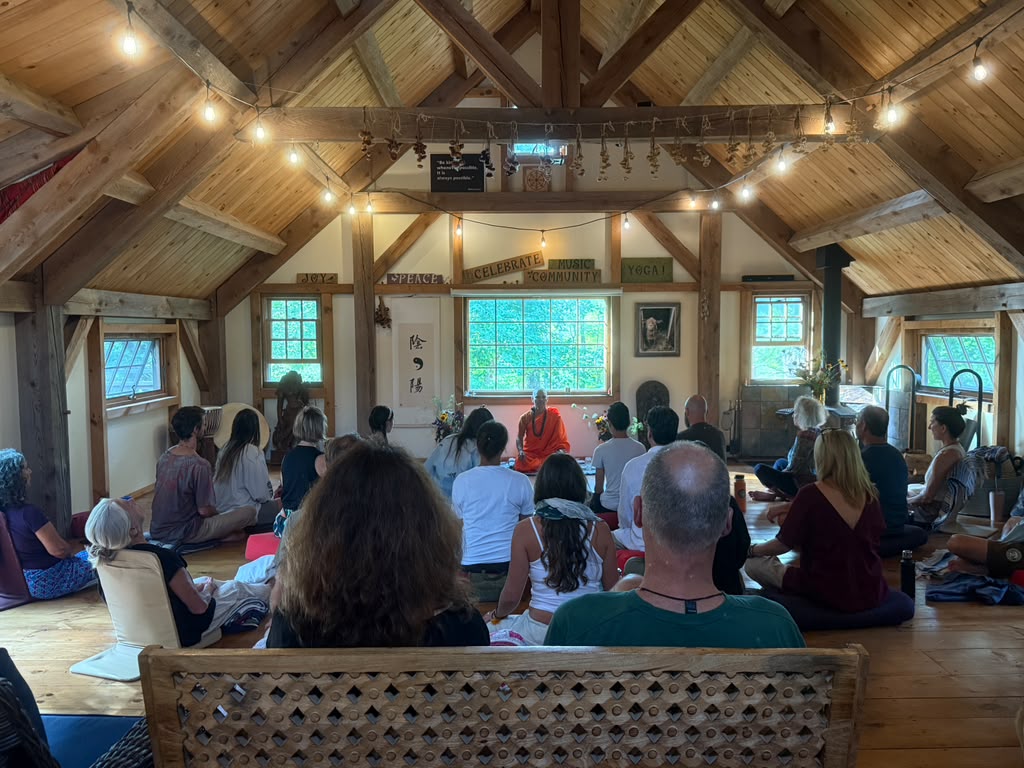
Come and sit with it.
Tell us which training you are drawn to and when you would like to arrive. We reply to every message, usually within a few minutes on WhatsApp.
- WhatsApp and phone
- +91 74528 65100
- Ashram
- Ghugtani Dholsut, Tapovan,Shivanandanagar (Rishikesh),Uttarakhand 249192, India